
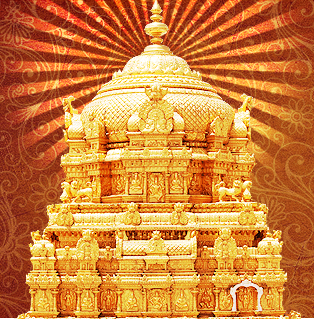
Lord Venkateswara's temple at Tirumala welcomes a huge number of devotees every single day — TTD's own site notes that more than 60,000 to 80,000 pilgrims visit daily. So there is no truly "empty" day. But the crowd does rise and fall in fairly predictable ways across the week, the calendar, and the seasons. If you have any flexibility in your dates, choosing well can be the difference between a few hours in the queue and most of a day.
This guide walks through those patterns honestly, so you can plan around them. We are an independent assistance service (not TTD, and not affiliated with or endorsed by TTD), and we will always point you to the official TTD portal for live, exact details — because the one thing about Tirumala crowds that never changes is that they change.
Weekdays are calmer; weekends, Fridays and holidays are heavier
The single most reliable pattern is the weekly rhythm. Tuesdays, Wednesdays and Thursdays tend to be the lighter days for darshan. Fridays, weekends (Saturday and Sunday), and any public holiday or long-weekend bridge day tend to be the heaviest, because that is when working families and groups travel.
This shows up directly in TTD's own daily operations. On busier days the temple opens Sarva Darshan (the free darshan) for longer — TTD describes roughly 18 hours on normal days and up to about 20 hours on peak days — and it runs more queue compartments to hold the larger crowd. TTD News publishes the day's compartment count and approximate Sarva Darshan waiting hours, and you will see those numbers swing widely from one day to the next. That swing is exactly the weekday-versus-weekend effect, made visible.
If you can shift your trip even by a day or two, landing on a mid-week date is the easiest single thing you can do to reduce your wait.
Avoid festival peaks and full-moon / new-moon days
Certain dates draw enormous crowds no matter what day of the week they fall on. The big ones include Brahmotsavam, Vaikuntha Ekadashi, Rathasapthami, and other major temple festivals, plus school-holiday and summer-vacation stretches when families travel together. Pournami (full moon) and Amavasya (new moon) also tend to be busier than ordinary days.
During these peaks, queues are longer, accommodation in Tirumala fills up early, and quota for ticketed darshan and sevas can be booked out well in advance. If your visit is flexible, it is usually worth checking the festival calendar and steering a few days clear of the headline dates. Because festival dates move each year with the Hindu calendar, please confirm the exact dates and any special darshan arrangements on the official TTD portal before you lock your plans.
Monsoon vs summer: weather changes comfort more than crowd
Season affects your comfort in the queue as much as the size of the crowd. The cooler, pleasanter window is broadly from around September through February, when the hill weather is mild and the standing wait is far more bearable — though this period also overlaps several festivals, so pick mid-week dates within it.
Summer (roughly March to June) brings heat on the plains and coincides with school holidays, which lifts the crowd. The monsoon months can be green and atmospheric on the hills but bring rain, mist and occasional slippery paths, especially if you plan to walk up the footpath. None of this makes any season "bad" — it simply changes what to pack and what to expect. Starting early in the day is sensible in any season: early-morning hours are generally cooler than midday.
Match your darshan type to the crowd
Your experience depends not just on when you go but on which darshan you choose. The main free option is Sarva Darshan — "darshan for all" — where you wait your turn at no cost; the wait stretches longer on heavy days. TTD also runs a free, time-slotted token system called Slotted Sarva Darshan (SSD), where you collect a token (using your Aadhaar) and are admitted at an allotted time slot rather than standing in line the whole while.
For a quicker, time-bound visit, TTD offers the paid Special Entry Darshan (Seeghra Darshanam), introduced specifically to provide quicker darshan, with advance online booking and an allotted reporting slot. Important to know: TTD has stated that holders of SSD tokens and Special Entry Darshan tickets are admitted only at their allotted time — arriving much earlier or later is not allowed. A simple rule of thumb: on a calm weekday, free Sarva Darshan can be very manageable; on a heavy festival or weekend, a pre-booked time-slot option saves the most uncertainty. Prices, slot times and quota release dates change, so confirm the current options on the official TTD portal.
Crowd levels are live — always check before you travel
Everything above describes tendencies, not guarantees. The real crowd on any given day is shaped by weather, last-minute festival activity, VIP movements and how token quotas were taken up — which is why TTD itself adjusts the number of queue compartments and the darshan hours day by day.
So treat your plan as a strong starting guess and verify close to your date. Check the live darshan and quota updates on the official TTD sources (tirumala.org, ttdevasthanams.ap.gov.in and news.tirumala.org), and book any ticketed darshan, seva or accommodation in your own name on the official portal as soon as the quota for your month opens. We never book on your behalf, never take ticket money, and never ask for your TTD login or OTP — booking early and mid-week, against a verified live status, is the most dependable way to a calm darshan.
Official sources: https://www.tirumala.org/Sarvadarshanam.aspx · https://www.tirumala.org/SpecialEntryDarshan.aspx · https://news.tirumala.org/category/darshan/ · https://news.tirumala.org/devotees-with-ssd-tokens-and-rs-300-sed-tickets-allowed-only-at-the-allotted-time-_-%E0%B0%B8%E0%B1%8D%E0%B0%B2%E0%B0%BE%E0%B0%9F%E0%B1%86%E0%B0%A1%E0%B1%8D-%E0%B0%B8%E0%B0%B0%E0%B1%8D%E0%B0%B5/ · https://ttdevasthanams.ap.gov.in/ · https://tirupatibalaji.ap.gov.in/. Always confirm current details on the official TTD portal.